Sleep comfort, explained
How to Choose a Latex Mattress Topper for Comfort and Support
A latex mattress topper can change the feel of a bed without replacing it. The right one adds cushioning, adjusts surface firmness, and brings a buoyant, responsive quality to sleep. The wrong one can leave the real problem untouched.
The decision comes down to more than a label. Material, construction, thickness, firmness, and the condition of the mattress beneath all shape what a topper can—and cannot—do.
Start with the mattress you already own
A topper is a comfort layer, not a new mattress in miniature. It sits between the sleeper and the mattress, changing the immediate feel of the surface while relying on the bed below for its basic support. That distinction is the most useful place to begin.
If a mattress feels slightly too firm, a topper may add welcome cushioning at the shoulders and hips. If it feels a little too soft at the surface, a firmer, thinner layer may make the bed feel more stable. But no topper can restore a mattress whose support system has sagged, broken down, or developed a deep, persistent hollow. A new layer may temporarily disguise the problem; it cannot reverse it.
Before shopping, inspect the mattress. Look across its surface in good light and note visible dips, lumps, or uneven edges. Consider how long the discomfort has been present and whether it changes when you sleep elsewhere. A mattress that has lost its underlying support may need replacement rather than an accessory.
Then name the problem as specifically as possible. Is the surface too hard? Do your shoulders feel compressed when you lie on your side? Does the bed feel warm or slow to respond? Are you looking for a little more pressure relief, or hoping to make a sagging mattress feel new? The clearer the diagnosis, the less likely you are to buy a topper for the wrong job.
What makes latex feel different?
Latex is known for a combination that can be hard to find in one material: cushioning with a springy, responsive feel. Rather than sinking slowly and holding a deep impression, latex tends to compress under weight and push back. That buoyancy can make it easier to shift position and can provide a gently conforming surface without the enveloping sensation some sleepers associate with memory foam.
Those qualities vary by product. Formulation, density, firmness, thickness, and the way the latex is made all affect the result. A latex topper is not automatically soft, cool, or supportive simply because it contains latex. Read the specifications and, whenever possible, test the feel against your own preferences.
Latex may appeal to people who want pressure relief but dislike feeling stuck in a mattress. It can also suit combination sleepers who move between positions and value a surface that responds quickly. Yet preferences are personal. A sleeper who enjoys a slow, deep hug may prefer another material; someone who wants a very plush, cloudlike feel may need more cushioning than a thin latex layer offers.
Keep expectations practical. A topper can change how the surface feels, but it does not make every mattress compatible with every sleeping position or body type. Nor does the word “latex” guarantee a particular lifespan, temperature experience, or health benefit. Construction and care matter, and individual comfort remains the final measure.
Natural, synthetic, and organic: read the material claims carefully
Latex toppers may be made with natural latex, synthetic latex, or blends. Natural latex is produced from the milky sap of rubber trees and processed into foam. Synthetic latex is manufactured from petrochemical ingredients. Blended products combine natural and synthetic components in varying proportions.
These categories are not interchangeable, and a broad marketing phrase may not tell you exactly what is inside. Check the product’s material disclosure for the stated composition and ask the seller if the percentage or source is unclear. The details matter particularly to shoppers who have material sensitivities, sustainability priorities, or a preference for plant-derived inputs.
“Natural” and “organic” are also different claims. Natural latex describes the material’s origin; organic certification concerns how specified materials were produced and verified under a particular standard. A product may contain natural latex without being certified organic. Certifications can help document claims, but their scope should be understood: a certificate may apply to a component or process rather than every part of the finished topper.
Look for the exact certification name and the organization that issued it. Confirm whether the claim covers the latex, the cover, or the complete product. If a company uses language such as “eco-friendly” or “chemical-free,” seek specifics rather than treating those phrases as proof of a defined standard.
Latex can have a noticeable odor when new. The intensity and duration vary. If you are sensitive to smells, review the maker’s guidance and return policy before opening the product. Airing a topper in a well-ventilated room may help; follow the care instructions and avoid applying cleaners or heat unless the manufacturer says they are suitable.
Thickness: how much change do you want?
Thickness affects how pronounced the topper’s influence may be. A thinner layer generally makes a more modest adjustment. A thicker topper can create a more noticeable cushion and may allow the body to settle farther into the surface. Neither is automatically better. The appropriate depth depends on your mattress, sleeping position, body weight, and preferred feel.
For a bed that is only a little too firm, a relatively thin topper may be enough. If you need more surface pressure relief, a thicker model could offer a more substantial change. But added depth can also make a bed feel less stable or alter how easy it is to move across the surface. It may change the overall bed height, affect fitted-sheet fit, or make the mattress feel less connected to its base.
Think of thickness as a tuning control, not a measure of quality. A thicker product does not necessarily provide better support. It may simply create a deeper comfort layer. If the underlying mattress is soft or sagging, adding more material can sometimes increase the sense of instability rather than solve it.
Measure the mattress and check the topper’s dimensions before ordering. A topper that shifts or leaves an uncomfortable edge can undermine the whole arrangement. Also check whether your current sheets will accommodate the combined mattress and topper depth. Deep-pocket sheets may be needed, especially when the topper is substantial.
Firmness is personal—and labels are not universal
Terms such as soft, medium, and firm offer a starting point, not a precise prediction. There is no single firmness scale used consistently by every manufacturer. Two toppers described with the same label may feel noticeably different, and a topper’s feel will be influenced by the mattress underneath.
Sleeping position can help narrow the choice. Side sleepers often need enough cushioning to reduce concentrated pressure at the shoulders and hips while keeping the body reasonably aligned. Back sleepers may prefer a balance of contouring and support that does not let the hips sink excessively. Stomach sleepers often prioritize a flatter, firmer-feeling surface to limit excessive arching through the lower back.
These are broad tendencies, not rules. Body shape, weight, mobility, mattress firmness, and personal comfort all change the equation. Couples may have different needs, and a shared mattress can make compromise part of the purchase. If you and a partner prefer substantially different feels, investigate whether the product’s design and the mattress setup can accommodate separate comfort choices.
When available, use a showroom trial to lie down in your usual sleeping position for several minutes. Notice pressure at the shoulders, hips, and lower back. Try changing positions. A brief test cannot reproduce a full night’s sleep, but it can reveal whether a surface feels immediately too hard, too soft, or difficult to move across.
Online shoppers should pay close attention to the trial period, return shipping, restocking charges, and packaging requirements. A generous-sounding comfort guarantee may have conditions. Read the policy before purchase, not after the topper has been unboxed.
Construction can change the experience
Latex foam is commonly made using different processes, and the resulting products can vary in feel and structure. The manufacturing description may be useful, but it should not replace the more practical questions: How firm is the topper? How thick is it? What materials are included? What does the warranty cover? Can you return it if it does not suit you?
Some latex products have a more uniform feel; others use perforations or other design details intended to affect flexibility and airflow. The pattern alone does not predict comfort. Look for clear product specifications and avoid assuming that a technical term guarantees a particular result.
A cover can also affect the surface. It may protect the foam and alter the hand-feel, but care requirements differ. Check whether it is removable and washable, whether a separate protector is recommended, and whether the topper itself can be cleaned. Latex foam generally should not be soaked or put through a washing machine unless the maker specifically permits it.
A properly fitting mattress protector can help shield the topper from sweat, spills, and everyday soil. Choose one that does not make the bed feel uncomfortably warm or noisy. If the manufacturer provides particular care instructions, follow those rather than relying on generic advice.
Temperature, movement, and shared beds
Sleep temperature is influenced by more than the topper. Room conditions, bedding layers, mattress construction, sleepwear, and individual physiology all play a role. Latex’s responsive structure is often described as more breathable than some dense foams, but no material can guarantee that a sleeper will stay cool. Covers and waterproof protectors can change how much heat and moisture are managed at the surface.
If you tend to sleep warm, consider the complete setup. Choose breathable sheets and avoid piling on layers that trap heat. Check the topper’s cover composition and care instructions. If possible, test the finished combination—mattress, topper, protector, and bedding—rather than judging one component in isolation.
For couples, movement transfer and edge-to-edge consistency can matter as much as firmness. A buoyant topper may make position changes feel easier, while also transmitting some movement differently from a slow-response foam. Results depend on the mattress beneath and the product’s construction. Consider whether one partner’s movement wakes the other, and include that concern in any trial-period evaluation.
Latex toppers can be heavy and awkward to lift, especially in larger sizes. That matters if you regularly rotate the mattress, change linens, or need to move the bed. Check the product weight and handling guidance before delivery. A layer that is comfortable once installed should also be manageable in ordinary use.
Compatibility, safety, and care
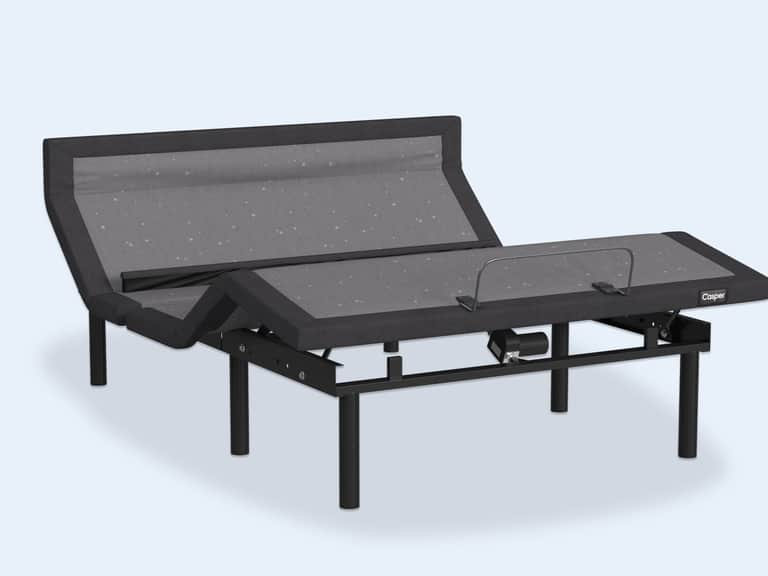
Before buying, confirm the topper is compatible with your mattress size and foundation. An adjustable bed introduces another consideration: the topper must be flexible enough to follow the base as it bends, and the manufacturer should confirm suitability. A topper that bunches, slides, or resists movement can disrupt comfort and may interfere with the bed’s operation.
Check the mattress and topper warranties. Some manufacturers specify what types of accessories may be used or how a mattress should be supported. Keep purchase records and care instructions, and understand what the warranty excludes. Normal softening, impressions within stated tolerances, stains, and damage from improper cleaning may be treated differently from a manufacturing defect.
Latex allergy is a concern for some people. Reactions can vary, and product construction and exposure routes differ. Anyone with a known latex allergy should consult a qualified healthcare professional and contact the manufacturer for precise material information before bringing a latex product into the bedroom. Do not assume that a cover eliminates all potential exposure.
For routine care, use a suitable protector, keep the topper dry, and follow the maker’s cleaning instructions. Avoid harsh chemicals, direct heat, and prolonged direct sunlight unless expressly permitted. If the topper develops a persistent odor, visible damage, or a change in support, consult the manufacturer rather than attempting repairs that could void coverage.
A practical checklist before you buy
A few focused checks can turn a crowded market into a manageable decision. Before selecting among latex toppers for mattresses, make sure you can answer these questions:
- What needs to change? Identify whether the bed feels too firm, too soft, warm, or difficult to move on.
- Is the mattress still supportive? Rule out sagging or structural wear that a topper cannot fix.
- What material is actually used? Confirm whether the latex is natural, synthetic, blended, or certified organic.
- How much thickness is appropriate? Match the depth to the degree of comfort adjustment you want.
- How does firmness feel to you? Treat labels as guidance and use an in-person test or return period where possible.
- Will it fit the bed and sheets? Check dimensions, mattress depth, and adjustable-base compatibility.
- What are the care and return terms? Review cleaning instructions, trial conditions, shipping costs, and warranty limits.
- Are there health or sensitivity concerns? Ask the manufacturer for detailed material information and consult a clinician when appropriate.
Price should be weighed against construction, transparency, return terms, and expected use—not treated as a shortcut to quality. Compare like with like: a thin topper and a thick one are not equivalent purchases, even if both are labeled latex. Look for clear specifications and be cautious when essential details are missing.
The right topper is a measured adjustment
A latex mattress topper can be a useful way to refine a bed that is fundamentally sound. It may soften a too-firm surface, add responsive cushioning, or create a different balance between contouring and ease of movement. Its value lies in that targeted change—not in the promise of transforming any mattress into a perfect one.
Choose by working from the bottom up: assess the mattress, define the comfort problem, then compare material, thickness, and firmness. Verify what “natural” or “organic” means in the specific product, and check compatibility, care, warranty, and return conditions. If possible, test the feel under realistic conditions.
The best choice is not the topper with the most impressive claim or the thickest profile. It is the one that addresses a real need, works with the mattress you own, and feels comfortable night after night. When the underlying support is still doing its job, a thoughtful layer of latex can make the bed feel less like a compromise—and more like a place to rest.